
Who This Is For
Is this English pathway suitable for you?
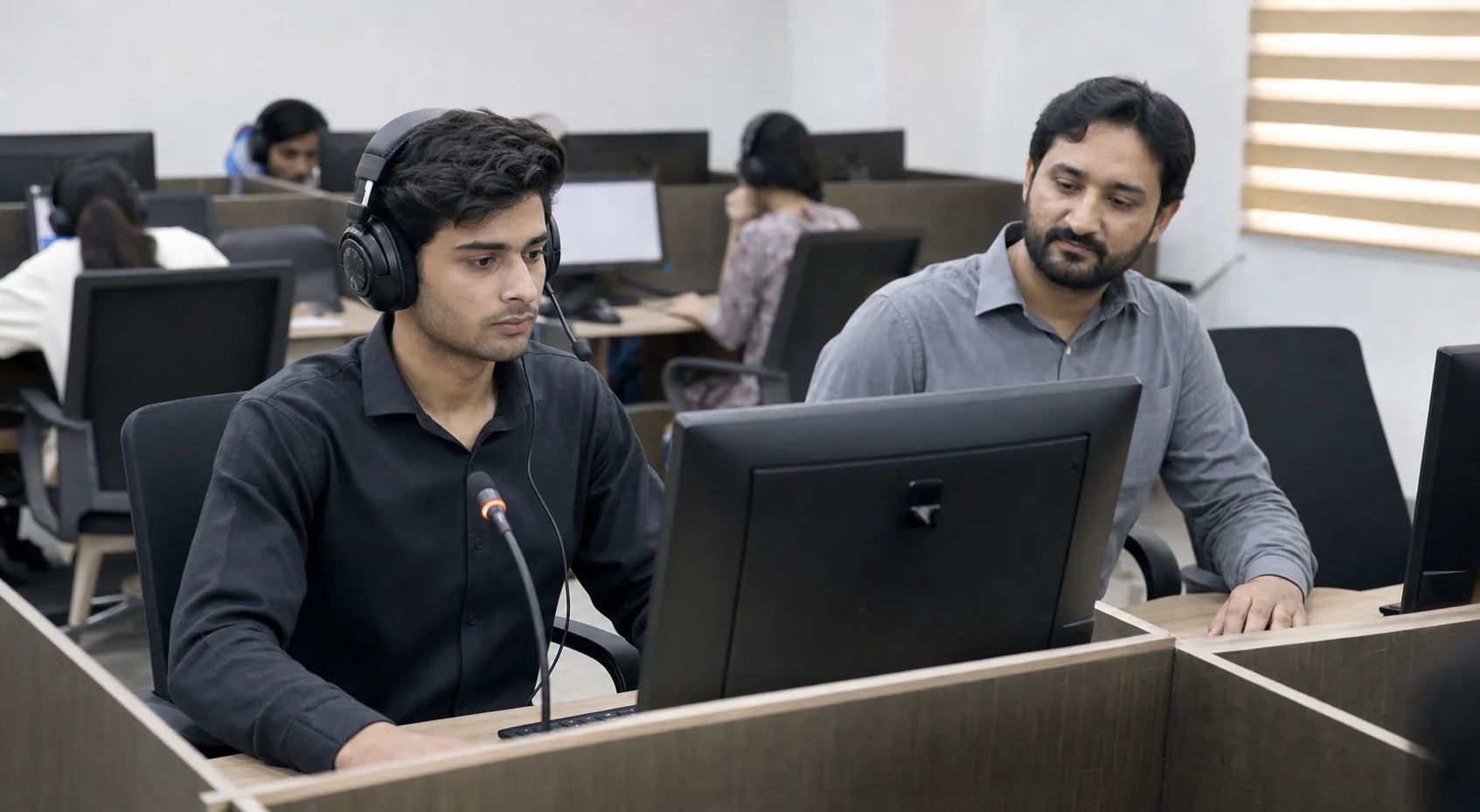
PTE may suit students who are comfortable working on a computer and whose selected university and immigration route accept the test.
What the guidance covers
Speaking tasks
Practise clear microphone technique, oral fluency, pronunciation and task completion without memorised delivery.
Writing tasks
Improve sentence control, summary structure, essay organisation and editing under time pressure.
Reading tasks
Work on evidence, vocabulary in context, re-ordering and efficient decision-making.
Listening tasks
Develop note-taking, detail recognition, summarising and response accuracy.
How the process works
- 01
Check whether PTE is accepted for the intended course and visa route.
- 02
Complete a format and baseline review.
- 03
Prioritise high-impact task weaknesses.
- 04
Practise with realistic timing and headset conditions.
- 05
Review mock performance before selecting a test date.
Important checks before you decide
- PTE acceptance can differ between institutions and countries.
- Computer familiarity helps, but language ability remains central.
- Template use should support clear answers rather than replace real language skill.
- No score or processing timeline should be guaranteed.
Frequently asked questions
Is PTE easier than IELTS?
Neither test is automatically easier. The better fit depends on the student's skills, computer comfort, task preference and the acceptance rules of the selected institution.
Do all universities accept PTE Academic?
No. Many do, but acceptance and required scores vary. Confirm the exact course and visa-route requirement before booking.
Does PTE preparation include speaking practice?
Yes. Speaking tasks require clear microphone technique, oral fluency, pronunciation and accurate completion of the specific task.